

Back to Blog
Leafy GreensSwiss Chard
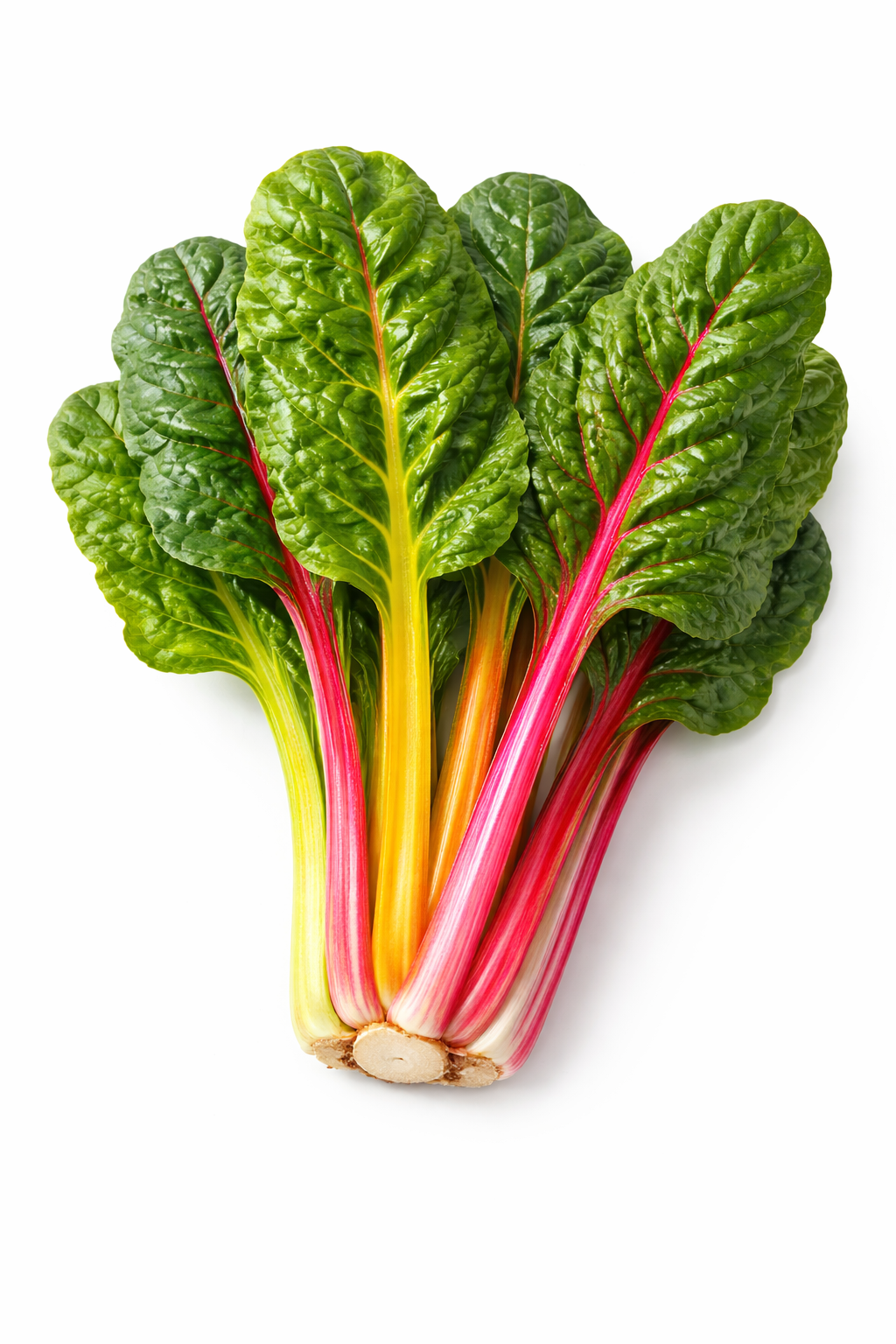
Swiss chard is a vibrant leafy green with earthy, slightly bitter leaves and tender, colorful stems that add both nutrition and visual appeal to a wide range of dishes.
Cultural and Historical Information
Swiss chard (Beta vulgaris) has roots in the Mediterranean, where it was cultivated by ancient Greeks and Romans as a staple leafy vegetable. Despite its name, it is not uniquely Swiss—the term “Swiss” was added in the 19th century to distinguish it from other beet varieties. Historically, chard has been valued for its resilience and ability to grow in diverse climates, making it a reliable crop across Europe and the Middle East. It has long appeared in traditional dishes such as Mediterranean sautés, Italian greens, and Middle Eastern stews. Today, Swiss chard continues to bridge traditional and modern cuisine, prized for both its nutritional density and its striking, colorful stems in contemporary cooking.
Nutritional Information
Plant Cup Maintenance Guide
.jpg)